NZX Announcement: Rights Issue

Dear Chatham Rock Phosphate shareholder or stakeholder,

This announcement has just been filed on NZX.

Shareholders will receive the offer documents shortly after 17 April – no action is required by you before then.  

Regards, 


Chris Castle

Chief Executive Officer

Chatham Rock Phosphate Limited

Email: chris@crpl.co.nz

Cell: +64 21 558 185

Skype: phosphateking

www.rockphosphate.co.nz


Tuesday, 31 March 2015 

Rights Issue

As previously advised to the market, the Board of Chatham Rock Phosphate (CRP) has decided to offer a rights issue to shareholders of CRP. The offer price will be $0.006 per share, to raise up to approximately $1.38 million in aggregate.

Shareholders recorded on the register as at the record date will receive renounceable rights to one new share for every existing share held. The rights are intended to be quoted on the NZAX Market.

Applicants may also apply for additional shares under an oversubscription facility. The facility will be subject to shortfall availability. The current timetable for the Offer is as follows:

On behalf of the Board, 

Chris Castle

Chief Executive Officer

Email: chris@crpl.co.nz

NZ Herald - Chris Castle and Linda Sanders: Phosphate mining rejection hypocritical

Dear Chatham Rock Phosphate shareholder or stakeholder,


This article was published earlier this week in the NZ Herald. I include both hard copy and the link.


Best regards,


Chris Castle

Chief Executive Officer

Chatham Rock Phosphate Limited

Email: chris@crpl.co.nz

Cell: +64 21 558 185

Skype: phosphateking

www.rockphosphate.co.nz


http://www.nzherald.co.nz/business/news/article.cfm?c_id=3&objectid=11418191

Chris Castle and Linda Sanders: Phosphate mining rejection hypocritical

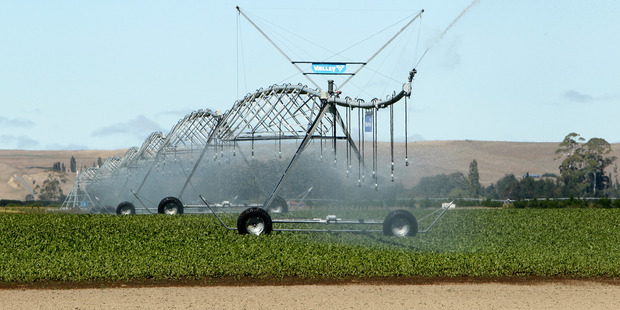
On pastures, Chatham Rise phosphate minimises waterways pollution because, unlike superphosphate, it binds to the soil so very little leaches into waterways. Photo / NZME.

Phosphate is crucial to plant growth and there are no local land-based sources. For the sake of our farms and waterways, and our economy, New Zealand needs this product's strong environmental benefits.

Yet a decision-making committee of the Environmental Protection Authority last month rejected Chatham Rock Phosphate's mining application, primarily because of perceived uncertainty over environmental effects.

The misguided decision shows the law needs revising to focus on risks associated with uncertainty and how environmental effects can be monitored and managed. After all, crossing the road has uncertainty, but the risks can be managed.

Chatham Rock Phosphate (CRP), a New Zealand public company, proposes mining 30sq km a year to extract 1.5 million tonnes of phosphate nodules for use in New Zealand and Asia-Pacific. The area is on the Chatham Rise, about two-thirds of the way to the Chatham Islands, at a depth of 400m.

The committee focused on potential environmental effects, but gave no weight to what we believe are considerable environmental benefits:

On pastures, Chatham Rise phosphate minimises waterways pollution because, unlike superphosphate, it binds to the soil so very little leaches into waterways.

It needs less frequent application as the fertility effect lasts three years, not one.

The local product has almost no cadmium, a heavy metal that stores in the soil and can be a health hazard. The current Moroccan product has among the world's highest concentrations.

CRP's product has a much lower carbon footprint because it doesn't need to be shipped from overseas.

It also offers a strategic security of supply. Almost all phosphate supplies come from politically unstable areas, mainly in North Africa.

CRP would be an ethical producer of farm inputs, and New Zealand wouldn't be exporting its pollution. Importing all our phosphate requirements shows the hypocrisy of wanting the benefits of highly productive farming while exporting our environmental footprint to countries that mine phosphate on land, which involves severe social and environmental distress in communities.

The committee discounted the project's economic benefits by focusing on a World Bank nominal phosphate price, a figure with no relevance to how the phosphate market operates.

Why would CRP pursue a marginally profitable project? We advised NZX in January that based on current exchange rates our annual profit before royalties and taxation would be almost $100 million. Only a few New Zealand companies generate profits that high.

New Zealand would benefit from CRP paying $34 million in annual taxes and royalties, plus millions in port charges. Jobs - many high-value and knowledge-based - would be created in the port, on the mining ship, in environmental monitoring and broader scientific research, in the agriculture and hospitality sectors and on the Chatham Islands.

The income earned by extracting phosphate would be $9.7 million per sq km, compared with $9000 per sq km annually from bottom trawling.

The committee concluded mining would have no significant impact on fishing yields or fishing industry profitability, marine mammals or seabirds. Despite this, they worried about our mining being in a Benthic Protection Area. These are areas where bottom trawling of fish is banned under the Fisheries Act.

The committee ignored CRP's proposed no-mining areas that would maintain comparable environmental protection on the Chatham Rise until marine protected areas can be enacted.

Ninety-six per cent of New Zealand is under water and development and environmental effects already take place there, particularly commercial fishing. Why is it okay for bottom trawling to be environmentally unregulated and damage 50,000sq km of seafloor every year, yet CRP's 30sq km is a greater threat?

Chris Castle and Linda Sanders are directors of Chatham Rock Phosphate.


NZX Announcement: Media Release - CRP gives further guidance on future strategy

Media Release

5 March 2015                                                           

CRP gives further guidance on future strategy 

Chatham Rock Phosphate (NZX:CRP) has continued to develop its future plans following the refusal of its Marine Consent application.

As previously announced, CRP has no intention of abandoning its Chatham Rise phosphate project and is continuing to develop strategies for progressing the project. Of critical importance to this is preserving its experienced and highly specialised executive team and maintaining the support of its key partners. CRP is pleased to advise of strong progress on both counts.

It is increasingly likely that CRP will pursue a re-submission of its Marine Consent application. However before it makes a final decision to do so CRP intends to continue to work with the Environmental Protection Authority to seek clarity on the interpretation of the EEZ legislation and the EPA’s policies and procedures for managing the consent process. CRP is also contributing where possible to the discussions about changes to the EEZ legislation and will incorporate any changes in our plans.

It is encouraging that the Government is investigating changes given the procedural and legal concerns with the process that CRP has previously detailed.

Executive Team

The core executive team at CRP consists of:

  • Chris Castle – CEO
  • Robin Falconer – Principal Scientist
  • Ray Wood – Chief Operating Officer
  • Linda Sanders – Corporate and Affairs and Stakeholder Communications.
  • Najib Moutia – Vice President – Sales and marketing

This team is supported by non-executive directors Robert Goodden and Jill Hatchwell.

The Board and Executive team have each confirmed their commitment to supporting CRP and progressing the project over the next 12 months.

 In so doing they have each agreed to significant reductions in remuneration to reduce overheads for CRP. They may each potentially receive remuneration at a later date through CRP shares (priced at VWAP) as compensation. However any such issue of shares would be subject to shareholder approval at a later time.

Capital Requirements

Considerable work is going into reducing overheads in CRP, working through cash requirements for the next 12 months and settling final costs associated with the Marine Consent process. The purpose of this work has been to develop a 12 month budget for keeping the project moving forward (including provision for a small amount of scientific and technical work), continuing work towards a re-submission of the Marine Consent application and increasing CRP’s focus on its Namibian permit applications. This capital requirement has been assessed at $1.25 million.

CRP intends to conduct either a rights issue or share purchase plan offer to shareholders in the near future as a first step towards funding this capital requirement. Given the prevailing market price of shares CRP is conscious that the offer will be highly dilutive and therefore will ensure shareholders have first priority to invest. Any shortfall from such offer will then look to be placed to non-retail investors.

Shareholders are encouraged to contact Chris Castle should they have views on how the capital raising should be conducted.

Business Strategy

CRP is also using the current time to assess its overall business strategy. One option is for CRP to increase its focus on its Namibia permit applications in the short term to help diversify CRP’s risk from primarily focusing on a single project.

Because of the significant expertise that CRP has developed through the Chatham Rise project, it is also being approached with new offshore mining opportunities and other onshore and offshore phosphate mining opportunities. CRP intends to continue to explore these opportunities and potentially further diversify its activities.


Chris Castle +64 21 55 81 85 or chris@crpl.co.nz

NZX Announcement: Media Release - CRP considers reapplying for marine consent

Media Release

18 February 2015                                                       

CRP considers reapplying for a marine consent

Chatham Rock Phosphate is considering reapplying for a marine consent to mine phosphate nodules on the Chatham Rise seabed, managing director Chris Castle said today.

We have decided an appeal is a pointless exercise.  Assuming we win on points of law, we would still need to go back before the same decision-making committee (DMC) who collectively overlooked the key merits of our project, appeared to misunderstand important evidence and submissions and selectively ignored CRP’s information to reach a “no” decision. 

Although they accepted the findings of scientific experts which showed negligible effects in areas such as fish, seabirds and mammals, why would we expect them to look at the other issues any differently the second time around?  While the DMC’s views as to the level of information and certainty that was required to satisfy them were wildly unrealistic and at odds with the intent of the EEZ Act, the reality is that they could simply apply that reasoning again to reach a conclusion that they are unlikely to have an open mind about. 

We have not committed to reapplying at this stage as we need to have confidence the process and the law is workable and the decision makers are technically competent.

However, we have no intentions of giving up. 

This project is too important for New Zealand, as well as our shareholders who have already invested $33 million in this project. 

As well as failing to take account of the economic benefits, the decision makers more importantly failed to consider the critical environmental benefits this project brings to New Zealand.

Chatham Rise rock phosphate would reduce pollution in New Zealand waterways from phosphate run-off and would reduce the application of the toxic metal cadmium on New Zealand soils, as our product contains among the lowest concentrations in the world. It would also drastically reduce New Zealand’s carbon footprint caused by transporting fertiliser inputs from the other side of the world.

We would be an ethical producer of farm inputs, and New Zealand would not be exporting our pollution to other countries.

While the EPA decision has decimated CRP’s share price, we believe it will recover.  When we established CRP in its present form five years ago, it had a market value of NZD 2 million, and a granted exploration licence.

Since then we have raised NZD 33 million, achieved a granted mining licence, completed one of the most comprehensive environmental impact assessments ever submitted, and collected vast amounts of data and scientific reports about the Chatham Rise – much of it used for public good science.  We also have a team of directors and executives who remain fully committed to the project, even though they won’t be getting paid for a while. 

The market value of the company early last week was NZD 40 million, now it is now back to NZD 2 million again.  However CRP now has an extended management group that is the envy of other players in the marine mining sector and a recognised place in the phosphate industry.  Accordingly we are in a very strong position and much better equipped to build on that NZD 2 million platform than we were five years ago. 

Corals

One of the key areas we are most concerned about are the findings on stony corals.  The decision said this was a unique, rare and vulnerable ecosystem.  The DMC  ignored unchallenged evidence that this is a common species found throughout the EEZ. 

We acknowledged the corals may not appear in a thicket or community elsewhere. Our proposed mitigation was to avoid those thicket areas by excluding them from our mining plan but that was not accepted.

We produced the best available evidence, and significant data to identify where the relevant communities were, and develop measures which would have addressed the risks posed to those communities.  We committed to ground-truth the modelling work, adjust mining exclusion areas and move the first three years of mining blocks while ground-truthing occurred.

So, the DMC effectively ignored a solution to their major concern and took a zero-risk/avoidance approach, which is not required by the EEZ Act.

Uncertainty

There are numerous instances where the committee found the scientific evidence insufficient and highlighted its “uncertainty”. This also occurred with the Trans-Tasman Resources application.

The DMC appeared to be unwilling or unable to understand the reality of working in New Zealand’s oceans. There will never be complete information and every environmental decision will have to accept some level of uncertainty.  This DMC’s decision has elevated the EEZ Act’s information principles to a level which, for this project, is both unrealistic and unachievable.

Assuming we decide to undertake another application we will need to clarify, for a new decision-maker, the confused thinking of this DMC on issues they identified as having too much uncertainty.  The information is there and there was an appropriate answer provided to every question – the DMC simply didn’t appear to understand it or otherwise believed it was less risky to decline consent.  

CRP deserved a better and more balanced consideration of its application, and a DMC which appropriately put the issues of risk and uncertainty into their proper context.  That didn’t happen.

The committee showed poor understanding of the purpose of modelling or how it works – and that it is extremely conservative, usually overstating effects several fold.  Its insistence on the need for ground-truthing shows a complete lack of understanding of how modelling is used routinely in land-based applications in New Zealand with great confidence and in marine projects around the world.

The DMC seemed to go hunting for a basis to decline, thus the discussion around uncertainty in relation to much of the modelling, ignoring the conservatism that was identified.  It read as if they were looking for a no or very low impact activity and that is all they were comfortable with granting.

The DMC’s interpretation of the purpose of the Benthic Protection Area coinciding with our application area (BPAs are simply no-fishing zones covered by the Fisheries Act), meant in their eyes the project could not proceed anyway. This is even though these BPAs were established without consideration of interested parties other than the fishing industry, do not maximise the conservation values of the EEZ, and will be reviewed and modified as part of the establishment of marine protected areas.

To attain the level of information and “certainty” about effects required by the DMC would require test mining, an activity that itself requires a marine consent.  This would require the expenditure of hundreds of millions of euros for a purpose-built ship and dredging system to carry out test runs on the Chatham Rise, to obtain certainty about effects. 

But the DMC in fact created a dead-end street, in that they would not even contemplate a short-term consent of a limited duration as a “test” because of the possible risk to the stony corals.  No rational applicant or investor would make such an investment in order to achieve the certainty of information this DMC considers is required. 

If there is so much uncertainty about projects such as ours, why has the government allocated rights to the resource under the Crown Minerals Act and allowed such marine consent applications to be considered, when they stand no realistic chance of being consented?

It seems this committee simply found it easier to say no than yes.  This was despite our proposing more than 60 adaptive management measures to comprehensively deal with every potential concern. 

Understanding financials

The other major concern we have with the DMC’s reasoning is their apparent inability to understand economics.  They relied on a World Bank nominal price for fertiliser to assess the economics of the project, a figure with no relevance to the way the phosphate market operates.

Why would we pursue a project that is at best marginally profitable?  We issued an announcement to the NZX only last month advising that based on current exchange rates our profitability before royalties and taxation would be close to $100 million a year. 

There are few New Zealand companies that generate profits of that level, and it is unfathomable to understand how that could be considered modest.

In terms of wider economic benefits CRP would pay port charges of several million dollars a year, and external employment opportunities would be created in the port, in the hospitality sector, on the mining ship, undertaking environmental monitoring, and in the agriculture sector – including many on the Chatham Islands.

The income earned per square kilometre of seabed affected by a single mining pass is NZD 9.7 million, compared with only NZD 9,000 annually from bottom trawl fishing. This income from mining is achieved without any impact on fishing yields or fishing industry profitability, according to joint statements signed by fish scientists and fisheries experts.  

Applying again

Our decision to consider resubmitting will depend on whether the Environmental Protection Authority, charged with interpreting the relevant legislation, can make significant changes to its processes.  We would not expect to re-litigate areas not in contention and we would expect the EPA to sharpen its act in terms of the quality of its processes and decision-makers, and the way it manages costs.

We remain convinced the law needs changing – it is obvious in order to avoid the same sort of outcome with other similarly well-prepared applications.  Even the committee said we had produced hugely detailed information - yet it still fell short of the legal requirement, as the DMC saw it.

Even more farcical, we need a marine consent (which we have been denied) to go out and get the additional information the DMC considered was required – how logical is that?  The EPA has tied the process completely up in knots and created a closed loop. 

The process needs to have better communication between the DMC and the applicant, offering the opportunity to identify concerns and options for solutions.  It needs to embrace the purpose of the Act and become solution oriented, rather than focusing on reasons why the project should not occur.  Otherwise what is the point in having such legislation in place – it simply becomes Clayton’s law.

This is not a victory for conservation – it is actually a tragedy for New Zealand’s countryside. The hypocrisy of our opponents is unbelievable, willing to export our environmental footprint to other countries by continuing to import polluting products. 

96% of New Zealand is under water and it is morally indefensible to not accept that some development and environmental effects will take place there. In addition, conservation costs money. The scientific outcomes and the taxes and royalties from projects like ours will help lay the groundwork and pay for the surveys that will identify areas of the marine estate most deserving of conservation.

The fishing industry is essentially entirely environmentally unregulated and destroys 3000 km2 of new seafloor and re-scrapes 47,000 km2 of already damaged seafloor every year – vastly more than the 30 km2 of seafloor we propose to mine every year.  Yet fishing claims we are a greater environmental threat.

The EPA needs to be neutral, rather than advocating as an environmental protector without due regard for other considerations, and if the Government seriously wants to promote development then it needs to speak up about the potential benefits of the project.

The decision makers must have the right mix of expertise to assess the merits and risks of marine projects. Our DMC didn't. The DMC needs at least one scientist who has the mental firepower to understand all the evidence, and at least one person who understands how risk and uncertainty is managed in the real world.

New Zealand can become a world leader in marine technology and expertise worth billions of dollars. Not a single person in the DMC, the EPA, the NGO's, or any of the opposition see that what is at stake is potentially a lot more to New Zealand than phosphate. And that is without including the significant environmental and economic benefits of our product, including low cadmium, low carbon footprint and low run off into waterways.

Media misinformation

CRP would also like to address some of the more seriously incorrect claims of fact made in the media over the past week, most particularly in the Sunday Star Times.

Firstly CRP is not proposing to dredge a “huge swathe” of the seabed.  It is proposing to mine 30 km2 a year.  This compares with 50,000 km2 the fishing industry bottom trawls every year. That is a “huge swathe”. The total CRP project mining footprint of 450 km2 for 15 years is only one quarter of 1% of the Chatham Rise. 

Secondly it was never “generally agreed” $169 a tonne is required for the project to break even.  CRP has never stated a break even market price. However, as the mining cost is roughly the cost of transporting the product from Morocco, the world price would need to be near zero before we could not compete in the local market.

Thirdly while New Zealanders might not know much about the 4.1 million km2 Exclusive Economic Zone as a whole, the 19,000 km2 of the Chatham Rise is the best studied area of the EEZ. This is largely thanks to the work CRP has undertaken, building on the 63 years of work since phosphate was first discovered on the Rise in 1952.

Despite what environmentalists might wish for, significant amounts of the money spent on scientific research is spent by companies seeking to get a financial return.  While SST writer Rod

Oram’s claim that $5 million a year is spent on marine science is rubbish – NIWA’s vessel Tangaroa costs an estimated $20 million a year to operate - these numbers are insignificant compared with the $100 million spent by CRP and TTR in recent years and the $70 million in present day terms spent by scientists previously in the CRP resource area.

The weirdest claim in the SST was this: “The minerals they want for farming on land are the ones that help make the fishing grounds so fertile.  We need logical choices. Threatening fishing to further farming is not one.”

Firstly, as noted before, the DMC found our proposal does not threaten fishing.

Secondly there is no fishing in the area we are proposing to mine, which is why the fishing industry unilaterally surrendered it as a no-fishing zone.

Thirdly there is absolutely no way phosphate helps make fishing grounds fertile.  The phosphate is bound within the phosphate nodules and cannot enter the water column.

Fourthly, no fish species have ever been observed eating rock phosphate nodules. 

A couple of commentators have picked up the idea of spatial planning, a concept we have advocated all along.  CRP’s marine consent proposals included recommendations on how spatial planning could be used to manage the potential effects on the coral communities.

 Marine spatial planning is a big issue for New Zealand. We believe a critical first step is to review the benthic protection areas enshrined in fisheries regulations as they don’t consider other uses such as minerals.  They could be modified to achieve the same conservation goals while allowing other uses of marine space, and not just areas chosen by the fishing industry because they have no commercial quantities of fish.


Chris Castle +64 21 55 81 85 or chris@crpl.co.nz
Radio NZ Interview: Media Coverage of EPA decision - Chatham Rock not giving up on mining project

Please click - this link - to listen to Radio NZ interview.

No surprisingly there was significant media attention focused on Chatham after the decision was announced and I gave a number of media interviews.

I attach a link to the one that best encapsulates our view on the decision, its weaknesses, and what we plan to do next. As you can see we do not intend to give up, so please do not give up on us. The Chatham story is right at the end.

Chris Castle


NZX Announcement: Media Release - CRP marine consent decline means New Zealand is closed for business

Media Release

11 February 2015                                                  

CRP marine consent decline means New Zealand is closed for business 

A decision by the Environmental Protection Authority to decline a marine consent application by Chatham Rock Phosphate is a seriously negative signal for New Zealand business, managing director Chris Castle said.

“It will make it even harder, if not impossible for companies to attract capital for new projects in New Zealand.  As the second application of its kind there have been some improvements in the process and were able to learn a lot  and apply those lessons.  If we can’t succeed having invested $33 million over seven years, then obviously the government is not serious about economic development.”

 “We had a strong level of agreement by scientific and other experts from both sides that the environmental effects were either limited or manageable.” 

“Obviously we need to take a bit of time to digest what the decision means and what our next steps will be, the options being an appeal, resubmitting, or walking away.”

 “To say we are bitterly disappointed is an understatement.  We are aghast.  The entire government process, and the EPA in particular, seems afraid to say yes to any project that involves any kind of environmental impact and that is simply not good enough if we are to provide a future for our country’s young people.”


Chris Castle +64 21 55 81 85 or chris@crpl.co.nz

NZX Announcement: CRP Secures Additional Capital

10 February 2015

CRP Secures Additional Capital

As detailed in the recent notice of meeting for the special meeting to be held on 19 February 2015, Chatham Rock Phosphate (CRP) has a continued need to raise new capital. This is particularly given the unforeseen delays with receiving the decision on our marine consent application.

CRP has today entered convertible loan agreements with qualified investors to raise a total of $245,000 in convertible loans. The summary terms of these loans are:

 Instrument:                     Interest Free Mandatory Convertible Loan

 Conversion Condition: Approval of the resolution to ratify placements at the 19 February special meeting of CRP shareholders. If the resolution is not approved, the convertible loans will require repayment on 1 June 2015 and CRP will be required to pay interest on the loans at a rate of 15% per annum.

 Conversion Price:           The Loans will convert to ordinary shares of CRP in March 2015 at a 15% discount to the 20 day volume weighted average price of CRP’s shares on the NZAX market.

As previously announced to the market, the Environmental Protection Authority has advised that its decision on the outcome of CRP’s application for a marine consent over an area of the Chatham Rise in New Zealand territorial waters will be released tomorrow. The CRP Board has decided to hold off on any further capital raising pending the outcome of the decision.


On behalf of the Board,


Chris Castle

Chief Executive Officer

Email: chris@crpl.co.nz

NZX Announcement: Media Release - CRP Assists with Namibian environmental pilot

Chatham Rock Phosphate is sharing its experience of New Zealand’s environmental consenting regime to assist Namibia in designing an environmental assessment process for its seabed phosphate resources.

The Namibian government sought input from interested parties to define the content of an Environmental Impact Assessment (EIA) of phosphate mining off Namibia and on-shore phosphate processing.

 CRP has just concluded a multi-million dollar process seeking a marine consent from New Zealand’s Environmental Protection Authority.  A decision will be announced next week.

CRP has applied through a Namibian subsidiary to explore marine phosphate deposits in Namibian waters. The applications will be considered by the Ministry of Mines and Energy when Namibia’s regional EIA is completed and the moratorium on exploration is lifted.

Managing Director Chris Castle said CRP decided to comment on the Namibia seabed environmental assessment project given the company’s first-hand New Zealand experience.

 “CRP’s environmental research and consultation had to be of the highest quality to comply with the rigorous standards demanded by the EPA process. This was demonstrated by the fact that the conferencing between experts during the marine consent hearing process achieved broad levels of agreement on most of our scientific findings.

 “We were told by Namibian government officials that New Zealand is viewed as developing international best practice standards for marine mining and so we are keen to support efforts for that to be achieved as widely as possible.”

 CRP was awarded a mining permit over the key resource area on the Chatham Rise in December 2013 and submitted its weighty Environmental Impact Assessment in May 2014 as a prelude to the marine consent process.

 “More than $30 million has been spent on the project in the last seven and a half years covering exploration, engineering and environmental studies,” Mr Castle said.  “CRP investigations have contributed to the Chatham Rise being now regarded as one of the best researched and understood marine environments in the New Zealand Exclusive Economic Zone.”

The research undertaken by CRP over the past four years has included analysis of oceanographic conditions, trace elements and toxicology, fish population dynamics, mammal and seabird behaviours, sea floor environmental surveys, plus modelling the interconnections of marine organisms,  sediment plume dynamics, the distribution of benthic communities, and the potential impacts from mining on the marine ecosystem.

 The information provided by CRP to the Namibian government includes electronic links to the EPA website containing the full EIA, transcripts of the hearing, expert evidence, public submissions and associated information presented during the 26-day hearing process.

The response, based on recent experience, includes CRP’s commentary on the tasks required for a robust assessment of the marine environment and the potential impacts of marine mining.  In its response CRP emphasised the importance of identifying and consulting with existing interests, collecting baseline information on oceanographic conditions and environmental linkages and sensitivities, and using numerical models to predict the nature and extent of impacts from marine mining. 

Chris Castle, Managing Director +64 21 558 185 or chris@crpl.co.nz

NZX Announcement: EPA confirms CRP marine consent decision for Wednesday 11 February

Media Release

EPA confirms CRP marine consent decision for Wednesday 11 February

4 February 2015 

The Environmental Protection Authority today posted a brief item on its website stating the decision on Chatham Rock Phosphate’s application for a marine consent will be released on Wednesday 11 February.

The announcement contains no other information.

CRP was previously informed by the EPA the decision would be presented to the EPA by the decision-making committee on Tuesday 10 February. 

The EPA post is reprinted in full below:

Update 4 February 2015

Release date for decision on CRP application

The decision on the application by CRP for a marine consent will be released by the EPA on Wednesday 11 February. The decision will be briefly summarised on this page and published in full on the page linked below.

The update can be found at http://www.epa.govt.nz/EEZ/chatham_rock_phosphate/Pages/default.aspx


Chris Castle, Managing Director +64 21 558 185 or chris@crpl.co.nz